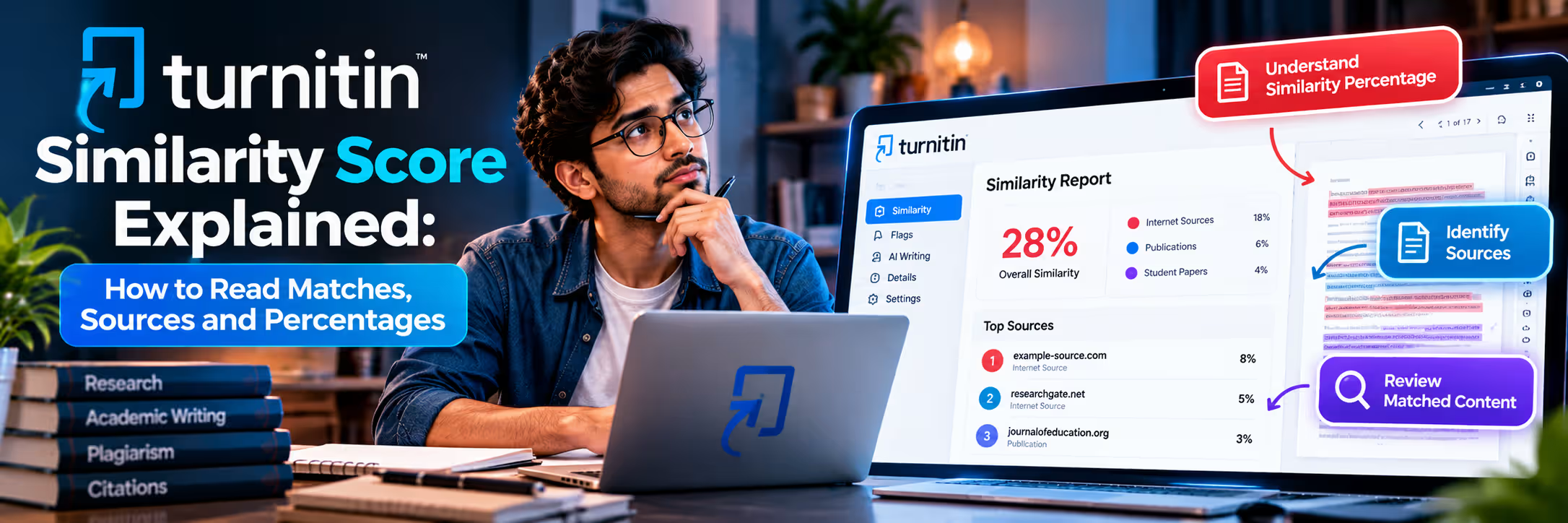

You upload an assignment to Turnitin and see 18% similarity.
Is that good? Is it bad? Does it mean 18% of the paper is plagiarised?
Not necessarily.
One of the biggest mistakes students make is treating the Turnitin similarity percentage as a plagiarism score. Turnitin itself states that it does not determine whether plagiarism has occurred. It compares submitted text against available databases and highlights similar or matching passages for human review.
A 20% report could contain properly quoted material and references. A 5% report could contain one small but important uncited passage copied almost word for word.
That is why learning how to read a Turnitin Similarity Report is more useful than trying to chase a particular percentage.
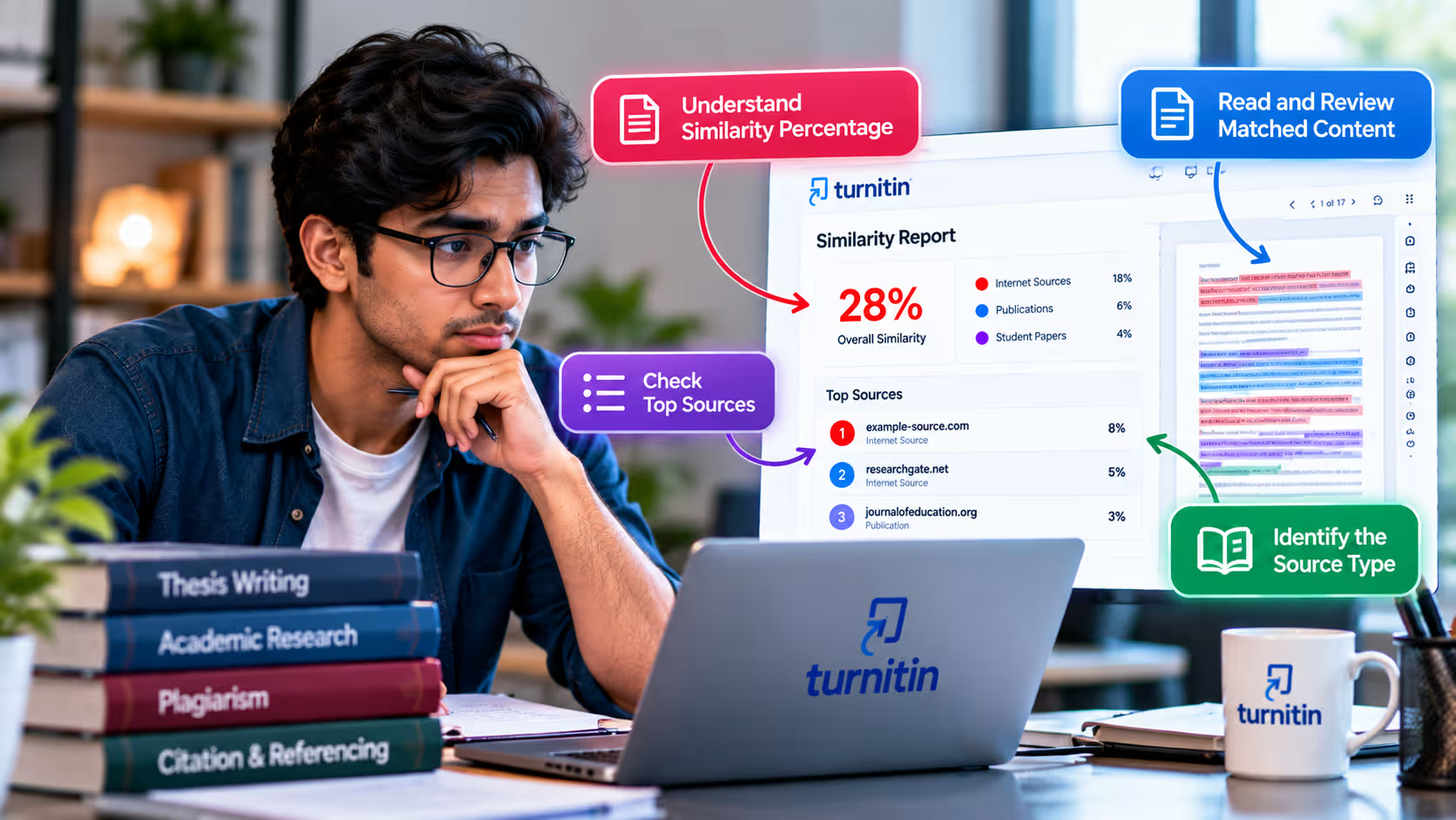
This guide explains what the score means, how sources and matches work, why percentages can change, and what you should review before submitting academic work.
Quick Answer: What Does a Turnitin Similarity Score Mean?
The Turnitin similarity score is the percentage of text in a submitted document that matches sources available to the databases selected for that submission.
Turnitin calculates overall similarity from the matching words identified within the document. Matched text is highlighted so the student or instructor can investigate the corresponding sources. Turnitin Guide
| Report Element | What It Tells You |
|---|---|
| Overall similarity percentage | How much submitted text matches available sources |
| Highlighted text | Where matching or highly similar wording appears |
| Source percentage | How much text is associated with a particular source |
| Match Overview | Main matches ranked from higher to lower similarity |
| Sources view | Sources connected with the detected matching text |
| Filters and exclusions | Ways to refine what contributes to the displayed report |
The percentage tells you how much matched text was detected. It does not explain whether each match is academically acceptable.
How Turnitin Finds Similarity
Turnitin compares a submission against databases available within the configured assignment or product.
Its documentation describes sources including current and archived internet pages, periodicals, journals and publications, as well as previously submitted student papers where that repository is included. Turnitin Guide
This means a sentence can be highlighted for several different reasons.
It may have been copied without attribution, but it could also be a correctly quoted passage, a reference entry, commonly used academic language or text that appeared in an earlier version of the same paper.
Similarity therefore needs interpretation.
For students reviewing a thesis, assignment or journal manuscript before formal submission, the objective should be to understand why the match exists, not simply make every highlight disappear.
How to Read the Match Overview
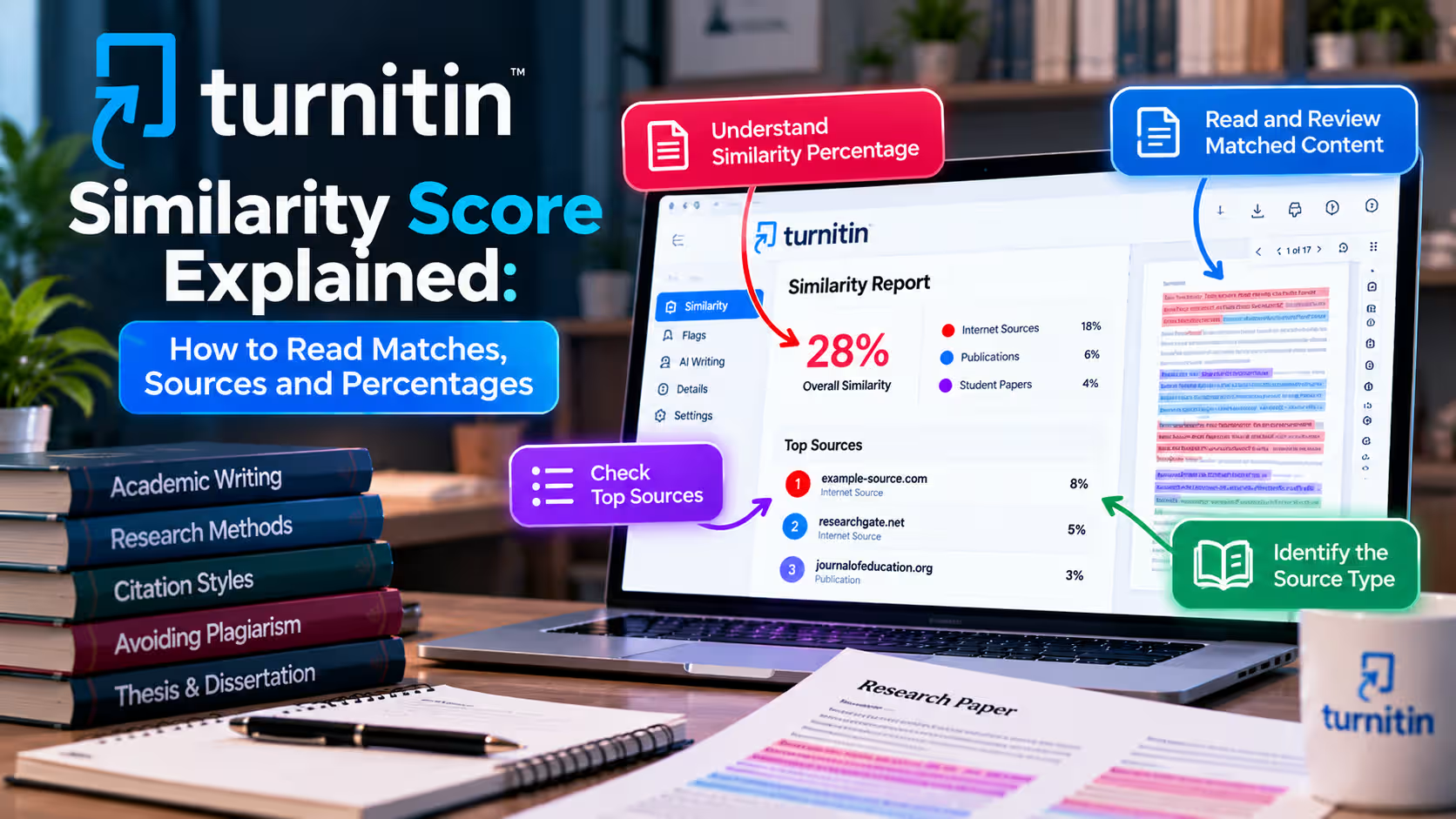
Opening the report reveals highlighted sections connected with source information.
Turnitin’s Match Overview lists detected matches from the highest similarity contribution to the lowest. Each match is associated with a source and a percentage. Selecting a match lets you inspect the corresponding text and investigate the source in more detail. Turnitin Guide
This is where meaningful review begins.
Imagine that a paper shows 22% similarity.
That number alone tells you very little.
The 22% could consist of one source contributing 15% and several small matches. Alternatively, it could come from dozens of one-percent matches across legitimate quotations, references and common phrases.
Those situations require completely different responses.
The first report deserves close inspection because a large continuous match may indicate excessive reliance on one source.
The second may simply contain normal academic overlap.
What Percentage Is Acceptable in Turnitin?
There is no universal acceptable Turnitin percentage.
Turnitin explicitly states that schools, instructors and individual assignments can have different expectations for the amount of matching text considered acceptable. Turnitin Guide
That means claims such as:
“Below 15% is always safe.”
or:
“Anything over 25% is plagiarism.”
are unreliable.
A university might establish its own threshold for a particular assignment, but that is an institutional rule—not a universal Turnitin standard.
The type of document also matters.
A literature review naturally contains citations and engagement with previous research. A technical document may contain unavoidable terminology. A short reflective essay may reasonably be expected to contain much less matching language.
Always follow your university, department, supervisor or journal requirements.
Why a High Similarity Score Is Not Automatically Plagiarism
A high score deserves attention, but it is not a verdict.
For example, a paper may include substantial properly quoted material. If quotations are included in the report, those passages can contribute to similarity.
A long bibliography can also produce matches.
Turnitin specifically provides filters for quoted text and bibliographic material because these elements can increase the displayed similarity percentage even though their presence does not automatically indicate academic misconduct. Turnitin Guide
Another situation involves previous submissions.
Turnitin notes that a final draft can match an earlier stored version of the same paper, potentially producing a very high score if the earlier submission is present in a searchable repository. Turnitin Guide
Context determines whether a match is concerning.
Can a Low Similarity Score Still Be a Problem?
Yes.
Suppose a 3,000-word essay has only 4% similarity.
That sounds low.
But imagine most of that 4% comes from one paragraph reproduced from a journal without quotation marks or appropriate attribution.
The overall percentage may be small, but the specific match could still represent an academic-integrity problem.
That is why reviewing the source and highlighted passage is more important than simply celebrating a low number.
A low score means Turnitin found relatively little matching text. It does not certify that every source has been used correctly.
How Quotes, References and Small Matches Affect the Report
Turnitin provides exclusions that can make a Similarity Report easier to interpret.
Depending on the report version and permissions, filters may exclude bibliography or reference sections, quoted material, properly cited text and small matches below a specified threshold. Turnitin Guide
These tools are useful for reducing noise.
For example, a bibliography containing dozens of publication titles may contribute matching text without telling you anything useful about the originality of the paper’s main argument.
Similarly, short technical expressions or common phrases may produce minor matches.
However, exclusions should not be used simply to make the number look better.
The purpose is to focus the report on meaningful similarity.
Turnitin also notes that student-applied exclusions can be temporary and may not change the official score visible to an instructor. Turnitin Guide
How to Review a Turnitin Report Properly
A practical review process is:
- Start with the overall score, but do not judge the paper from it.
- Open the highest-contributing sources first.
- Read every substantial highlighted passage in context.
- Check whether direct quotations have quotation marks and citations.
- Check paraphrased ideas for appropriate attribution.
- Separate references, templates and legitimate common terminology from meaningful overlap.
- Rewrite overly close paraphrasing in your own academic voice while preserving the original meaning.
- Add missing citations rather than simply changing words to reduce the percentage.
- Follow your institution’s required similarity rules before final submission.
The goal is better academic writing, not simply a smaller number.
Why Does the Similarity Percentage Sometimes Change?
Two reports on related versions of a document do not always produce exactly the same percentage.
Several factors can influence the result.
The available comparison databases and assignment settings matter. Filters and exclusions can also alter what contributes to the displayed score. Turnitin continuously compares work against available source collections, so source availability can matter as well.
Resubmissions can introduce another complication.
Turnitin documentation notes that overwritten or resubmitted files may sometimes require up to 24 hours before a new Similarity Report is generated. Turnitin Guide
Do not assume that a small score difference automatically indicates a problem with the system.
Instead, compare the underlying matches.
What Does No-Repository Checking Mean?
No-repository checking is particularly relevant when reviewing a thesis or unpublished draft before the official university submission.
When a checking option is genuinely configured as no repository, the submission is processed for similarity without being added to the searchable paper repository under that particular workflow.
That does not mean Turnitin stops comparing the document with other sources.
The document can still match internet pages, publications and previously available material.
No-repository therefore concerns what happens to that submission for future repository matching—not whether similarity checking occurs.
For a deeper explanation, read DeltaBox IT’s guide to Turnitin non-repository checking in Bangladesh.
Similarity Score vs AI Writing Score
These are different results and should not be confused.
The Similarity Report identifies text overlap with available sources.
An AI-writing indicator, where available through the relevant product or workflow, attempts to identify text patterns associated with AI-generated writing.
A high similarity percentage does not mean the document was generated by AI.
Likewise, an AI-related result does not tell you how much of the paper matches existing sources.
Treat them as separate review signals.
Turnitin-Based Similarity Checking in Bangladesh
Students, researchers and academic writers in Bangladesh who need to review a document before submission can explore DeltaBox IT’s current Turnitin-based similarity checking options.
The available packages should be selected according to the report you actually need, including repository conditions and whether additional AI-related checking is included.
For unpublished research or thesis drafts, confirm the submission setting before uploading the file. A no-repository similarity check can be particularly relevant when you do not want the preliminary draft added to a searchable submission repository.
DeltaBox IT is an independent third-party digital-product provider and does not own, operate or represent Turnitin. Product access, report availability and platform-side behaviour remain subject to the applicable service and provider conditions.
You can also explore other Education & Research tools available through DeltaBox IT.
Frequently Asked Questions
Does 20% Turnitin Similarity Mean 20% Plagiarism?
No. It means approximately 20% of the submitted text was identified as matching available sources under the applicable report settings. The matched passages must be reviewed to determine whether they are quotations, citations, legitimate overlap or potentially problematic use of sources. Turnitin Guide
Is 0% Similarity Always Better?
Not necessarily. Academic writing normally engages with existing sources. A very low score does not prove citations are correct, just as a higher score does not automatically prove plagiarism.
Can References Increase the Turnitin Percentage?
Yes. Bibliographic material can contribute to similarity when it is included in matching. Turnitin provides bibliography exclusions to help reviewers focus on other parts of the submission. Turnitin Guide
Can Turnitin Detect Plagiarism Automatically?
Turnitin identifies similarity rather than making a final plagiarism judgment. The instructor, reviewer or institution must interpret the matches in context. Turnitin Guide
Final Thoughts
A Turnitin similarity score is a starting point for review, not a grade and not a plagiarism verdict.
Do not ask only, “How can I reduce the percentage?”
Ask:
Which passages matched, which sources caused those matches, and have I quoted, paraphrased and cited them appropriately?
That approach is more useful than targeting an arbitrary number.
A well-prepared academic paper is not one that simply produces the lowest possible similarity score. It is one where source use is transparent, quotations are identified correctly, paraphrasing is genuinely your own, and citations allow readers to trace the ideas you used.