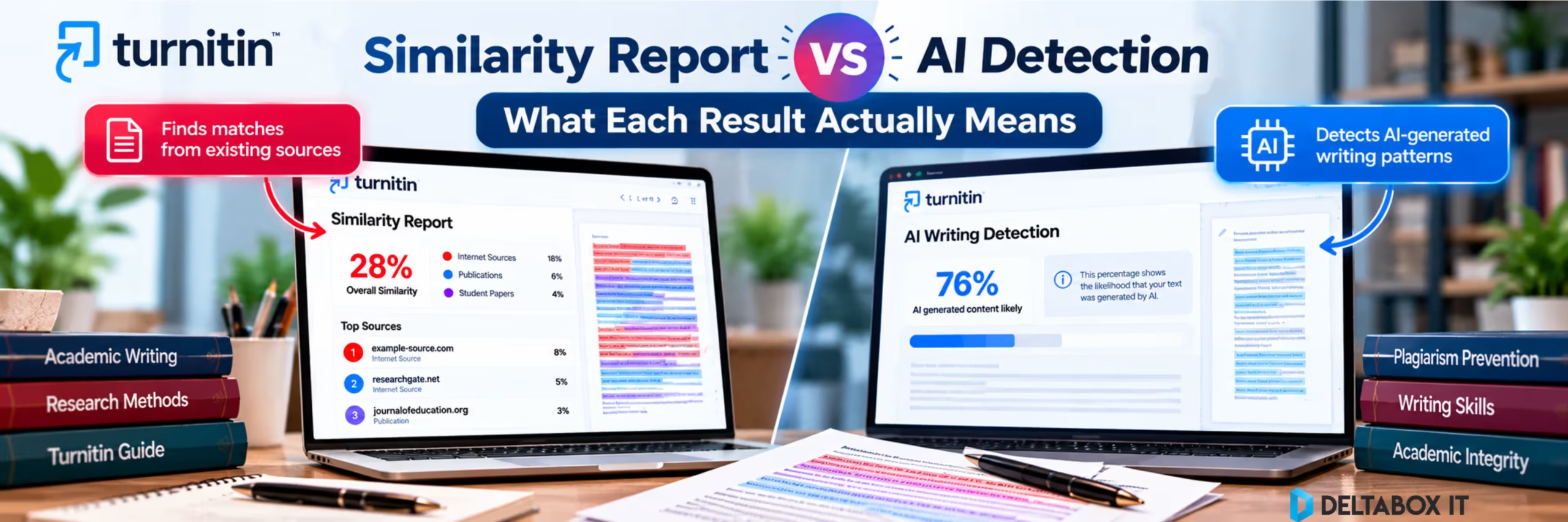

A Turnitin Similarity Report and an AI-writing result can appear in the same academic workflow, but they answer different questions.
The Similarity Report asks: How much of this document matches text found in available sources?
AI detection asks: How much qualifying prose appears likely to have been generated or altered by AI, according to an AI-detection model?
Those measurements are not interchangeable. A paper can have high similarity and little AI indication, or low similarity while an AI detector flags part of the writing. Neither percentage is a final verdict on plagiarism, authorship or academic misconduct.
Quick Answer: Similarity Report vs AI Writing Report
| Result | What It Measures | What It Does Not Prove |
|---|---|---|
| Similarity Report | Text overlap with available sources | Plagiarism |
| AI Writing Report | Qualifying prose that may be AI-generated or AI-altered | Who wrote the text |
| Source matches | Where similar wording appears | Whether every match is improper |
| AI highlights | Sections the detector considers AI-related | Academic misconduct |
In short: similarity percentage = matched text; AI percentage = model-based AI-writing estimate.
What Does the Turnitin Similarity Report Measure?
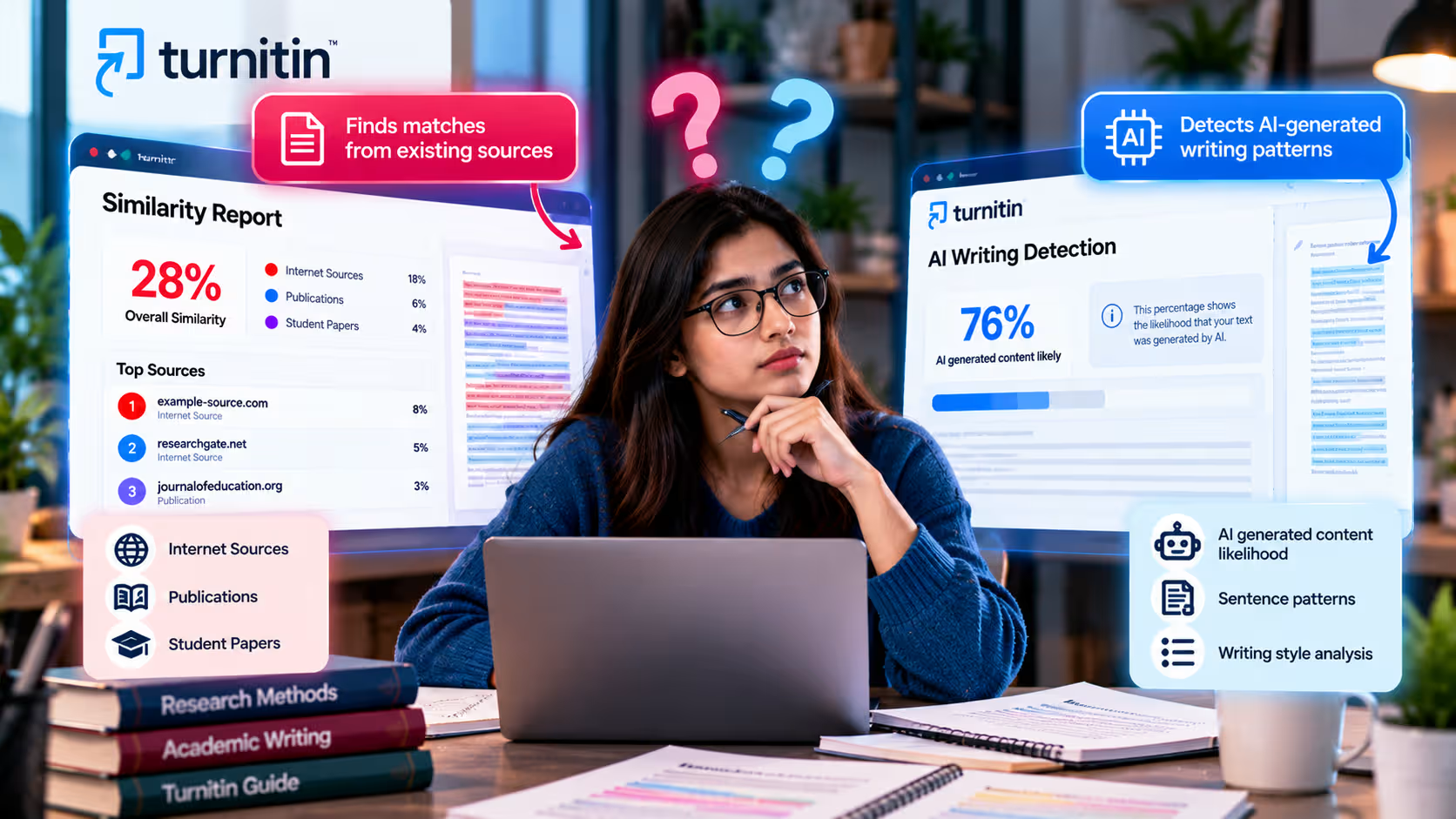
Turnitin’s Similarity Report compares submitted text against source collections selected for the assignment. These can include web pages, academic publications and previously submitted papers.
The overall percentage reflects how much text in the document matches those sources. Turnitin calculates overall similarity from matching words relative to the total text in the submission. Turnitin Guide
So if a paper shows 24% similarity, that does not mean 24% of the paper is plagiarised.
Legitimate quotations, references, standard technical wording and earlier versions of the same paper can all create overlap. Turnitin distinguishes similarity from plagiarism; the report highlights text for human review. Turnitin Guide
What Does Turnitin AI Detection Measure?
Turnitin’s AI Writing Report uses a separate detection model.
Instead of comparing a document with external sources, it analyses qualifying long-form prose and estimates whether that text may have been generated by a large language model or, in supported cases, generated and subsequently altered through AI paraphrasing or bypass tools. Turnitin Guide
Turnitin currently requires an eligible document to contain at least 300 words of long-form prose and meet supported file, language, size and word-count requirements before an AI Writing Report can be generated. Turnitin Guide
That percentage is therefore measuring something fundamentally different from similarity.
Why Can the Percentages Be Completely Different?
Because they measure different signals.
A literature review containing many properly quoted sources may have a relatively high similarity percentage because quotations and references overlap with published material. The same paper could show little or no AI indication.
An AI-generated essay using original wording could produce low similarity because its wording does not closely match available sources, while an AI-writing detector could still flag qualifying passages.
A document could also have both. Each result needs separate interpretation.
This is why a 35% similarity score and a 0% AI result are not contradictory, just as a low similarity score does not prevent an AI-related result.
Does a High Similarity Score Mean Plagiarism?
No.
Turnitin states that a high similarity score does not automatically indicate plagiarism. It identifies overlap so the reviewer can investigate how sources were used.
A higher percentage might come from quotations, references, templates or previous submissions. A low percentage is not automatically safe either: one uncited copied section can still be serious.
Check whether the source was cited, direct wording was quoted correctly and paraphrasing was genuinely rewritten.
The percentage helps locate material requiring review. It does not make the academic-integrity decision.
Does an AI Score Prove That a Student Used AI?
No.
Turnitin states that AI-writing detection can produce incorrect classifications and should not be used as the sole basis for adverse action against a student. Human judgment and the institution’s academic policies remain necessary. Turnitin Guide
AI detectors are probabilistic. They estimate patterns; they do not observe who typed the document or reconstruct the writing process.
Turnitin also treats low AI results cautiously. In current reports, detections between 1% and 19% are shown as an asterisk rather than an exact percentage because Turnitin reports a higher incidence of false positives in that range. Exact highlights are also withheld for those low results. Turnitin Guide
An AI result should therefore be treated as a review signal, not proof of authorship or cheating.
Similarity Report vs AI Report: The Practical Difference
The Similarity Report helps review citations, quotations and source overlap. The AI Writing Report identifies prose that may warrant authorship review.
If Turnitin highlights a paragraph as similar to a journal article, you can inspect the source and compare the wording directly.
An AI highlight works differently: there is no external source proving where the sentence came from. The model is making an inference from the writing pattern.
That difference affects how each result should be investigated.
Why “Plagiarism Check” and “AI Check” Are Not the Same Service
Similarity checking and AI detection are separate functions.
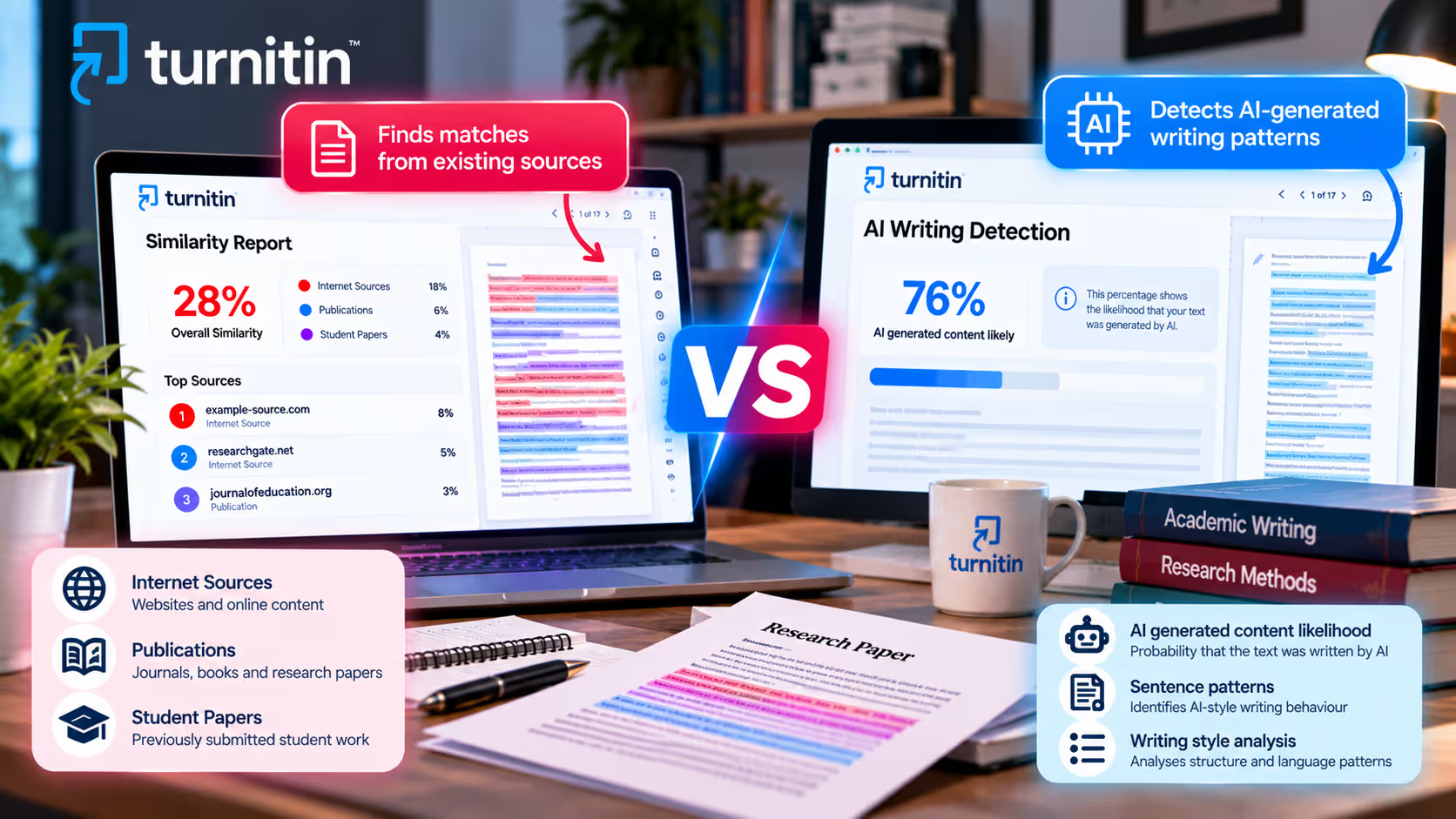
A document can pass a similarity review and still receive an AI flag. It can also contain problematic copied material while an AI detector finds nothing.
Before using any academic checking service, confirm which system generates the similarity result, which system generates the AI result, whether the report is an official Turnitin report or a third-party result, whether the submission is added to a repository, and what file or language requirements apply.
A dashboard displaying both percentages does not necessarily mean both results came from Turnitin.
How Should You Review Both Results?
Start with similarity. Open the largest matches, inspect the passages, separate legitimate citations from overly close wording, and correct missing attribution.
Then review any AI-related result separately.
Look at flagged passages where available, but also consider drafts, notes, revision history and the writer’s normal style. If an instructor raises a concern, writing-process evidence can provide context that an AI percentage cannot.
Do not rewrite sentences simply to “beat” an AI detector. The objective should be transparent authorship and correct source use.
What Does This Mean for Thesis and Research Papers?
Research documents naturally interact heavily with existing literature.
A thesis may contain quotations, methodology terminology, citations and standard descriptions that contribute to similarity. Reviewers therefore need to distinguish legitimate academic overlap from unattributed copying.
AI use is a separate policy issue.
Some universities or journals may permit certain AI-assisted activities while others impose stricter rules. The relevant question is whether the student followed the policy applying to that course, department or publication.
There is no universal “safe Turnitin percentage” or “acceptable AI percentage” that guarantees academic acceptance. Turnitin itself emphasises contextual interpretation rather than judging plagiarism from similarity alone. Turnitin Guide
What About No-Repository Checking?
No-repository checking concerns whether a preliminary submission is added to a searchable paper repository under that workflow.
It does not change what similarity means, and it does not make an AI detector more accurate.
For thesis or assignment pre-checks, no-repository processing can help avoid making that preliminary upload a future repository match under the stated service conditions.
For a deeper explanation, see DeltaBox IT’s Turnitin Non-Repository Checking in Bangladesh guide.
Similarity and AI Checking Through DeltaBox IT
DeltaBox IT provides academic checking options through third-party platforms, so customers should not assume that every package produces the same similarity or AI report.
Review the current plagiarism and AI checking options from DeltaBox IT according to the specific package before ordering.
Academi.cx currently provides a personal dashboard where the similarity component is described as Turnitin-based, while the AI-content percentage and detailed AI analysis come from Academi.cx’s own detector. DeltaBox IT explicitly states that this AI result is not the official Turnitin AI detector or Turnitin AI Writing Report.
AiplagDetect works differently. Its current DeltaBox IT listing states that AiplagDetect is an independent platform, does not use the Turnitin API and does not generate official Turnitin Similarity Reports or Turnitin AI reports. Its similarity and AI-content results come through the AiplagDetect platform.
This distinction is important. If you specifically require a particular Turnitin report, do not assume that a third-party AI percentage or similarity result is equivalent.
You can review the separate AiplagDetect Plagiarism & AI Checker and Academi.cx Pro pages for their current report types, access models and package conditions.
DeltaBox IT is an independent third-party digital-product provider and does not own, operate or represent Turnitin, Academi.cx or AiplagDetect.
Frequently Asked Questions
Is Turnitin Similarity the Same as AI Detection?
No. Similarity measures text overlap with available sources. AI detection estimates whether qualifying prose may have been AI-generated or AI-altered. Turnitin describes the AI percentage as separate from and independent of the similarity score. Turnitin Guide
Can a Paper Have Low Similarity and Still Be Flagged as AI?
Yes. Original wording may produce little source overlap while still triggering an AI-writing detector because the two systems analyse different signals.
Why Does Turnitin Sometimes Show *% for AI?
Turnitin currently suppresses exact AI percentages between 1% and 19% because it reports a higher incidence of false positives in that range. Turnitin Guide
Does DeltaBox IT Always Provide Turnitin AI Detection?
No. The AI-detection method depends on the selected third-party platform. Academi.cx and AiplagDetect, for example, currently use their own AI-detection systems rather than providing the official Turnitin AI Writing Report. Academi.cx Pro
Final Thoughts
The difference is simple:
A Similarity Report asks where the text overlaps with existing sources.
An AI Writing Report asks whether qualifying prose shows patterns the detection model associates with AI-generated or AI-altered writing.
Neither result is a final judgment about academic misconduct.
Similarity requires source and citation review. AI detection requires contextual and human review. And when using a third-party checking service, you should also verify which platform generated each result.
That is the safest way to interpret the numbers without treating two fundamentally different reports as though they mean the same thing.
“`